Q: What is a climbing wall?
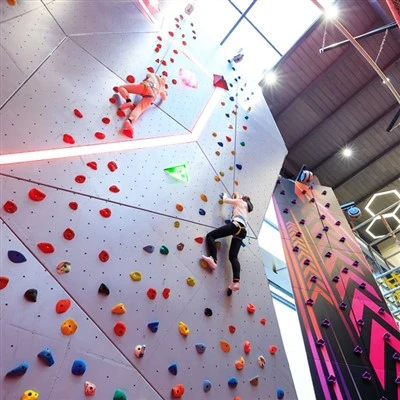
A: A climbing wall is a vertical structure designed for rock climbing or indoor climbing activities. It typically consists of artificial holds, grips, and features that simulate the challenges of outdoor rock formations. Climbing walls can vary in size, complexity, and difficulty levels, catering to climbers of different skill levels. These walls provide a controlled environment for individuals to practice and improve their climbing skills, offering a range of routes and obstacles to challenge climbers physically and mentally. Climbing walls are commonly found in indoor climbing gyms, recreational centers, or outdoor adventure facilities. They serve as a popular and accessible way for people to engage in rock climbing activities in a safe and controlled setting.
Q: What materials are used to construct a climbing wall?
A: A climbing wall is typically constructed using the following materials:Plywood Sheets:Used as the primary surface material for the climbing wall.Thickness varies but is generally between 3/4 inch to 1 inch.T-Nuts:Embedded in the plywood to create anchor points for holds.Allow for the attachment of climbing holds and features.
Q: How are climbing walls designed for different skill levels?
A: Climbing walls are designed to accommodate different skill levels by incorporating various elements and features that cater to climbers with varying abilities. Here are some ways in which climbing walls can be designed for different skill levels:Wall Inclination: Climbing walls can be designed with adjustable angles of inclination. For beginners, walls may have a lower angle to provide a more accessible climbing experience. As climbers progress, they can challenge themselves with steeper inclines that require increased strength and technique.Hold Types: Climbing walls have different types of hand and footholds to cater to climbers of different skill levels. Beginner walls might feature large, juggy holds that are easy to grip. As climbers advance, walls may incorporate smaller, more challenging holds, such as crimps or slopers, that require greater finger strength and technique.
Q: What safety equipment is needed for climbing walls?
A: Climbing walls pose unique challenges, and ensuring safety is paramount. Here is a list of essential safety equipment for climbing walls:Helmet:A properly fitted climbing helmet protects the head from falling debris and potential impacts during a fall.Harness:A climbing harness securely attaches the climber to the rope. It should fit snugly but comfortably around the waist and thighs.
Q: How is a climbing wall maintained?
A: Maintaining a climbing wall involves several key steps to ensure safety and durability. Regular inspections are crucial to identify any damage or wear, such as loose holds or worn-out surfaces. Cleaning the wall regularly removes dirt, chalk buildup, and oils from climbers' hands, preserving the wall's texture and grip. Routinely tightening bolts and checking anchor points ensures structural integrity. Additionally, replacing worn-out holds and repairing any damage promptly helps maintain a challenging and safe climbing experience for enthusiasts.
Q: What are the benefits of climbing walls for physical and mental health?
A: Climbing walls offer multifaceted benefits for both physical and mental health. Engaging in climbing activities contributes to enhanced physical fitness by promoting strength, flexibility, and cardiovascular endurance. The varied movements involved in climbing stimulate muscle groups throughout the body, fostering overall strength development. Moreover, the mental benefits of climbing are significant, as the activity requires problem-solving skills, concentration, and strategic planning to navigate the wall successfully. Climbing also serves as a stress-relieving outlet, promoting mental resilience and fostering a sense of accomplishment as individuals overcome physical challenges. Overall, the combination of physical exertion and mental engagement makes climbing walls a valuable asset for holistic health and well-being.
Q: How can climbing walls be used in physical education programs?
A: Integrating climbing walls into physical education programs provides a dynamic and effective approach to enhancing students' physical abilities and overall well-being. These walls offer a unique opportunity for students to develop essential motor skills such as balance, coordination, and strength. Incorporating climbing activities into the curriculum encourages teamwork, communication, and problem-solving, fostering a supportive and collaborative learning environment. Additionally, climbing promotes cardiovascular fitness and muscular endurance, contributing to a comprehensive physical education experience. Moreover, the element of challenge in climbing encourages goal-setting and perseverance, instilling valuable life skills in students. Overall, the inclusion of climbing walls in physical education programs not only diversifies the learning experience but also promotes holistic physical and mental development.
Q: What are some common climbing techniques that can be practiced on a climbing wall?
A: There are several common climbing techniques that can be practiced on a climbing wall. The first is called "bouldering," which involves short and powerful climbs without using ropes. This technique focuses on developing strength, balance, and problem-solving skills. Another technique is called "top-rope climbing," where climbers are attached to a rope that runs from the climber to the top of the climb and back down to a belayer. This technique emphasizes endurance and technique. Lead climbing is another common technique where climbers attach the rope on their way up, clipping into pre-placed anchors. This method requires advanced technique and rope management skills. Additionally, "crimping" and "edging" are common techniques that involve gripping small holds with fingers and using the edges of holds for footholds, respectively. Practicing these techniques on a climbing wall can help climbers improve their skills and prepare for outdoor climbing adventures.
Q: How are climbing holds attached to the wall?
A: Climbing holds are typically attached to the wall using bolts or screws. The climbing wall itself is constructed with a series of T-nuts or threaded inserts embedded within the surface. Holds come with corresponding holes or attachment points, allowing them to be securely fastened to the wall. The process involves aligning the holds with the T-nuts, inserting screws or bolts through the holds into the T-nuts, and then tightening them to ensure a firm grip. The placement and arrangement of holds on the climbing wall can be adjusted to create various routes and challenges, catering to climbers of different skill levels. This modular setup allows for versatility and the ability to customize climbing routes based on the desired difficulty and climbing experience.
Q: How often should the layout of a climbing wall be changed?
A: The frequency of changing the layout of a climbing wall depends on several factors, including the size of the climbing facility, the number of climbers, and the goals of the facility or its management. However, as a general guideline, it is recommended to change the layout of the climbing wall every few months or at least once a season. This timeline helps maintain interest and motivation for regular climbers by offering fresh challenges and preventing routes from becoming too predictable or overused. Changing the layout also allows for the introduction of new techniques, movements, and holds, promoting skill development and variety in climbing experiences. Ultimately, the goal is to keep climbers engaged, stimulated, and continuously progressing in their climbing abilities.
Q: Can climbing walls be used by people of all ages?
A: Climbing walls can be enjoyed by people of virtually all ages. While there may be age restrictions or guidelines specific to certain climbing facilities or programs, the activity itself caters to a wide range of individuals. Many climbing walls offer routes and challenges suitable for children, teenagers, adults, and even seniors. Climbing provides opportunities for physical exercise, problem-solving, and mental focus, making it accessible and beneficial for people of all ages. However, it is always important for individuals to assess their own physical abilities and consult with professionals or instructors to ensure safe and appropriate participation, especially for younger or older climbers who may require additional supervision or specialized instruction.
Q: What is bouldering, and how does it relate to climbing walls?
A: Bouldering is a climbing technique characterized by short, powerful climbs typically performed on low walls without the use of ropes or harnesses. Climbers engage in bouldering to navigate a series of challenging routes or "problems" that require strength, agility, and problem-solving skills. Climbing walls often feature designated bouldering areas equipped with crash pads to cushion falls. Bouldering provides a dynamic and accessible way for climbers to hone their skills, focusing on strength, balance, and technique in a concentrated space. It is a popular aspect of indoor climbing facilities, offering a social and community-oriented atmosphere where climbers can share beta (information on climbing routes) and support each other in tackling various boulder problems.
Q: What is the difference between indoor and outdoor climbing walls?
A: Indoor climbing walls and outdoor climbing walls differ primarily in their location and construction. Indoor climbing walls are specifically designed and built within a facility, using materials like plywood, fiberglass, or concrete to create artificial climbing surfaces. They offer controlled and controlled environments with preset routes, various difficulty levels, and safety measures such as crash pads and ropes. Indoor climbing walls are highly accessible, allowing climbers to train and practice year-round regardless of weather conditions. In contrast, outdoor climbing walls refer to natural rock formations or cliffs that serve as climbing surfaces. Outdoor climbing provides a different experience as the routes are not pre-set and may require skills in route finding, anchor placement, and protection. Outdoor climbing is more influenced by natural elements such as weather and rock conditions, and climbers often require outdoor-specific equipment such as ropes, harnesses, and protection gear. While indoor climbing walls offer convenience and a controlled environment, outdoor climbing walls provide the opportunity to engage with nature and experience the challenges and beauty of real rock.
Q: How high are typical climbing walls?
A: The height of typical climbing walls can vary depending on the facility and the purpose of the wall. In many indoor climbing gyms, the walls typically range from 10 to 50 feet in height. These shorter walls are often designed for bouldering and training purposes. However, there are also taller walls designed for lead climbing or top-rope climbing, which can reach heights of 50 feet or more. For outdoor climbing walls, the height can vary greatly depending on the natural rock formations. It is not uncommon to find outdoor climbing walls that are several hundred feet tall. It's important to note that regardless of the height, safety precautions such as crash pads, harnesses, ropes, and trained staff should always be utilized to ensure a safe climbing experience.
Q: What is a belay, and how is it used in climbing walls?
A: A belay is a crucial safety technique used in climbing walls to protect climbers from falls. In this method, a belayer, positioned on the ground or at the base of the climbing wall, manages the rope connected to the climber. When the climber ascends, the belayer takes up slack in the rope to minimize potential fall distances. In the event of a fall, the belayer uses various techniques, such as dynamic belaying, to absorb the force and gradually arrest the fall, preventing injury. Belaying is integral to top-rope climbing and lead climbing, ensuring that climbers are securely attached to the wall and supported throughout their ascent. The communication and trust between the climber and belayer are essential elements of this safety system, emphasizing the collaborative nature of climbing.
Q: What types of injuries can occur on climbing walls, and how can they be prevented?
A: Various injuries can occur on climbing walls, including strains, sprains, fractures, bruises, cuts, and falls. To prevent these injuries, several measures can be taken. Firstly, proper warm-up exercises and stretching before climbing can help prevent strains and sprains. Climbers should also wear appropriate safety gear, including helmets, harnesses, and climbing shoes, to protect themselves from potential falls or impact. Regular equipment inspections and maintenance are essential to ensure their reliability. Climbers should receive proper training and instruction on belaying techniques, route selection, and falling techniques. Additionally, following established guidelines and safety protocols, such as checking knots, using crash pads, spotting, and communicating effectively with partners or belayers, can greatly reduce the risk of accidents. Maintaining a strong focus on safety, being aware of personal limits, and gradually increasing difficulty levels can further minimize the occurrence of injuries on climbing walls.
Q: How much does it cost to install a climbing wall?
A: The cost of installing a climbing wall can vary depending on various factors such as size, complexity, materials, and location. Here is a breakdown of some potential costs involved:Wall construction: This includes the framework, support structures, and climbing surface materials (e.g., plywood, fiberglass, or concrete). Costs can range from $5,000 to $20,000 or more, depending on the size and quality.Holds and climbing features: Climbing holds come in a variety of shapes, sizes, and materials. The cost of holds can range from $300 to $2,000 or more, depending on the number and quality of the holds desired. Additional climbing features, such as volumes or specialized holds, can further increase the cost.Safety equipment: This includes crash pads, ropes, belay devices, harnesses, helmets, and other safety gear. Costs for safety equipment can range from $500 to $2,000, depending on the number of climbers the wall is intended for.